Cholesterol Numbers Explained: What Your Levels Really Mean
Decode your cholesterol test results. Understand LDL, HDL, triglycerides, and total cholesterol numbers and what they mean for your heart health.
Cholesterol Numbers Explained: What Your Levels Really Mean
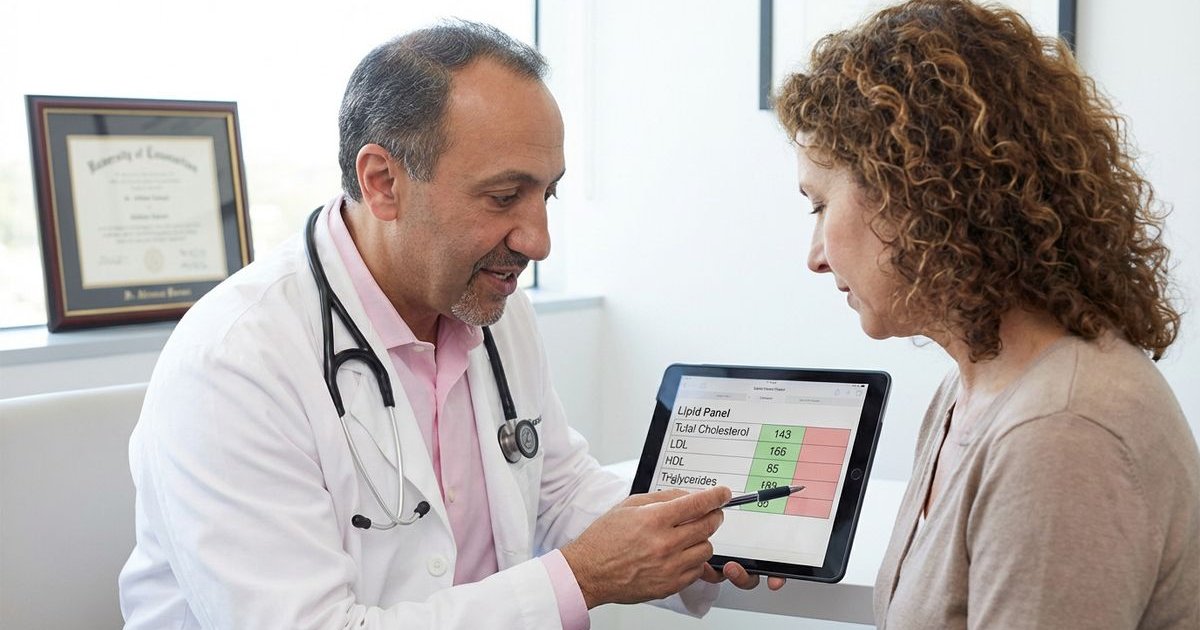
You have likely stared at a lab report and wondered if those numbers are a ticking clock or just noise. We see patients every day who feel perfectly fine but have lipid panels telling a completely different story. Understanding these numbers is often the single most effective step you can take for your heart health and is a cornerstone of preventive cardiology.
The following guide breaks down exactly what the data means and what targets you should actually aim for.
What Is Cholesterol?
Cholesterol is a waxy substance found in every cell of your body. Your body actually requires it to build cell membranes and produce essential hormones like estrogen and testosterone. It is also vital for manufacturing vitamin D and creating bile acids for digestion.
Your liver produces about 80% of the cholesterol your body needs. The remaining 20% typically comes from the foods you eat. Problems arise when this balance shifts due to diet or genetic factors that cause your body to produce too much or process it too slowly.
Understanding Your Lipid Panel
A standard lipid panel measures four key values. Current guidelines have shifted away from “one size fits all” numbers to targets based on your specific risk profile.
Total Cholesterol
This number represents the total amount of cholesterol in your blood. It is calculated by adding your HDL and LDL levels plus 20% of your triglycerides.
Target levels:
- Desirable: Less than 200 mg/dL
- Borderline high: 200-239 mg/dL
- High: 240 mg/dL and above
We often remind patients that this number is just a snapshot. You might have a “normal” total score but still be at risk if your good cholesterol is too low or your bad cholesterol is too high.
LDL Cholesterol (Low-Density Lipoprotein)
LDL is the “bad” cholesterol that carries fat to your arteries. Excess LDL can lodge in vessel walls and form plaques that eventually rupture and cause heart attacks.
Target levels vary based on your overall risk:
| Risk Level | LDL Target |
|---|---|
| Low risk (no heart disease) | Less than 130 mg/dL |
| Moderate risk (2+ risk factors) | Less than 100 mg/dL |
| High risk (heart disease, diabetes) | Less than 70 mg/dL |
| Very high risk (multiple events) | Less than 55 mg/dL |
Current American College of Cardiology (ACC) guidelines emphasize driving LDL as low as possible for high-risk patients. There is no evidence that naturally low LDL is harmful.
HDL Cholesterol (High-Density Lipoprotein)
HDL is the “cleanup crew” that transports cholesterol away from your arteries and back to the liver for removal. High levels are generally protective.
Target levels:
- Men: Above 40 mg/dL
- Women: Above 50 mg/dL
- Optimal: 60 mg/dL or higher
Functional quality matters here. Some people have high HDL that does not function well, so a high number is not a free pass to ignore other risk factors.
Triglycerides
Triglycerides are the most common type of fat in your body and act as a storage system for unused calories. This number often spikes in response to high sugar intake or alcohol consumption.
Target levels:
- Normal: Less than 150 mg/dL
- Borderline high: 150-199 mg/dL
- High: 200-499 mg/dL
- Very high: 500 mg/dL and above
Levels above 500 mg/dL can be dangerous and increase the risk of pancreatitis. We frequently see these numbers drop rapidly with dietary changes like cutting out soda or reducing alcohol.
Beyond the Basic Panel: Advanced Testing
Standard panels are useful, but they can miss up to 50% of people at risk. Advanced testing offers a deeper look at the actual particle counts rather than just the total weight of the cholesterol.
We often recommend specific tests like the Quest Cardio IQ or LabCorp NMR LipoProfile for a clearer picture.
Comparison: Basic vs. Advanced Testing
| Feature | Basic Lipid Panel | Advanced Testing (ApoB/LDL-P) |
|---|---|---|
| What it measures | Total weight of cholesterol | Actual number of particles |
| Best for | General screening | Patients with obesity or diabetes |
| Cost | Usually covered 100% | ~$100-$150 out of pocket |
| Accuracy | Good for average risk | Superior for metabolic syndrome |
LDL Particle Number (LDL-P)
Two people can have the same LDL number (e.g., 100 mg/dL) but vastly different risks. One might have fewer large particles while the other has many small, dense particles that easily penetrate artery walls. LDL-P counts these particles directly.
Apolipoprotein B (ApoB)
ApoB is a protein attached to every dangerous particle in your body. Leading cardiologists now consider ApoB to be a more accurate predictor of heart disease than LDL cholesterol alone. If your LDL is normal but your ApoB is high (over 130 mg/dL), you are still at increased risk.
Lipoprotein(a) [Lp(a)]
Lp(a) is a genetic “sticky” cholesterol that affects about 20% of the population. Diet and exercise typically do not change this number. Knowing your level is critical because high Lp(a) (above 50 mg/dL or 125 nmol/L) requires more aggressive management of your other risk factors.
Inflammation Markers
High-sensitivity C-reactive protein (hs-CRP) measures inflammation in your arteries. Elevated levels suggest your body is actively building plaque even if your cholesterol numbers look decent.
What Affects Cholesterol Levels?
Factors You Can Control
Diet: Saturated fat is the primary driver of high LDL. The standard American diet is full of red meat and full-fat dairy that keeps these numbers high.
Weight: Excess weight often correlates with high triglycerides and low HDL.
Physical Activity: A sedentary lifestyle allows LDL to linger in your bloodstream.
Smoking: Tobacco use damages your blood vessels and actively lowers your protective HDL.
Factors Beyond Your Control
Genetics: Familial hypercholesterolemia is a genetic condition that causes high cholesterol regardless of diet.
Age: Your liver becomes less efficient at clearing cholesterol as you get older.
Sex: Women typically see a sharp rise in LDL levels after menopause due to hormonal changes.
US Statistics: According to recent CDC data, nearly 11.3% of US adults have total cholesterol higher than 240 mg/dL. You are definitely not alone if your numbers are out of range.
Improving Your Numbers
Dietary Changes
Small additions to your diet can yield measurable results.
Increase soluble fiber: Fiber acts like a sponge that soaks up cholesterol. We specifically recommend psyllium husk (found in Metamucil) because it has an FDA-approved claim for heart health. Note that wheat dextrin (Benefiber) does not have the same data for lowering cholesterol.
Add plant sterols: These compounds block cholesterol absorption. Look for fortified products like Benecol spreads or Minute Maid Heart Wise orange juice. Aim for about 2 grams per day.
Reduce saturated fat: Keep saturated fat to less than 7% of your daily calories. This single change can drop LDL by 8-10%.
Eat fatty fish: Salmon and sardines are rich in Omega-3s. These help lower triglycerides even if they do not directly lower LDL.
Lifestyle Modifications
Exercise regularly: Aim for 150 minutes of moderate intensity exercise per week. This can raise your HDL by 5-10%.
Lose excess weight: Dropping just 5-10% of your body weight can significantly improve your lipid profile.
Quit smoking: Your HDL levels can rebound relatively quickly after you stop using tobacco.
Medications
Diet and exercise are the foundation, but genetics often require medical support.
Statins: Drugs like Atorvastatin (Lipitor) and Rosuvastatin (Crestor) are the gold standard. They can reduce LDL by 30-50% and stabilize plaque.
Non-Statin Options: New therapies are available for those who cannot tolerate statins. Ezetimibe (Zetia) blocks absorption, and Bempedoic acid (Nexletol) is a newer oral option that works differently than statins.
PCSK9 inhibitors: Injectables like Repatha are powerful tools that can lower LDL by 60% or more for very high-risk patients.
How Often Should You Check?
Adults without risk factors: Every 4-6 years starting at age 20.
Adults over 40: Routine screening is standard.
Current Guidelines: New guidelines suggest that non-fasting tests are acceptable for initial screening. You generally only need to fast if your triglycerides are above 400 mg/dL.
Retesting: If you start a new medication or diet, we recommend rechecking your numbers in 4-12 weeks to see the effect.
Making Sense of Your Results
Your cholesterol numbers are pieces of a larger puzzle. A doctor evaluates them alongside your blood pressure and family history to calculate your 10-year cardiovascular risk score.
For instance, an LDL of 130 mg/dL might be acceptable for a healthy 30-year-old. That same number would trigger immediate treatment for a 60-year-old with diabetes.
Take the Next Step
Understanding your cholesterol numbers empowers you to make decisions that protect your future. If it has been more than a year since your last test or if you are unsure about your risk, schedule an appointment at Los Angeles Heart Specialists.
Our team offers comprehensive cardiovascular risk assessments including advanced lipid testing. We help you get the complete picture of your heart health and provide personalized guidance to reach your optimal levels.

LA Heart Specialists Team
Our team of board-certified cardiologists and medical writers provide expert insights on heart health.
Learn more about our team
Have Questions About Your Heart Health?
Our board-certified cardiologists are here to help. Schedule a free consultation to discuss your concerns.