Heart Stents Explained - What They Are and How They Work
Learn how coronary stents open blocked arteries, what to expect during the procedure, and important information about recovery and long-term care.
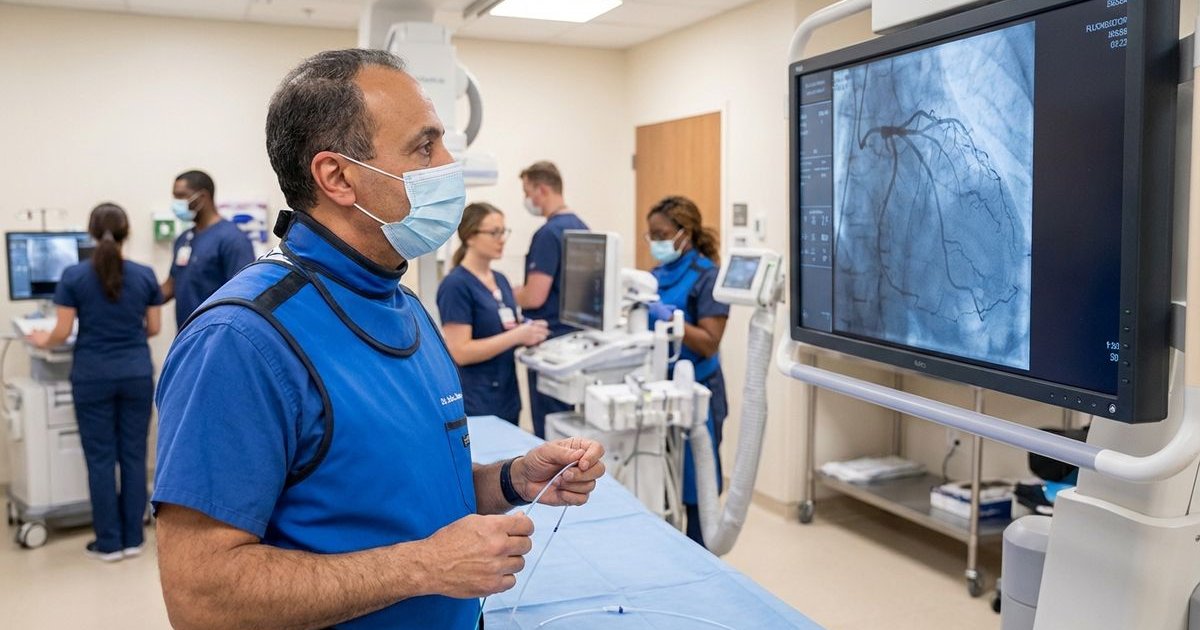
If you have recently learned about a blockage in your arteries, the terminology can feel overwhelming. We explain these concepts to patients every day to replace anxiety with clarity.
A coronary stent is not just a medical device. It is often the key to preventing a heart attack or reclaiming your quality of life through interventional cardiology.
We are going to break down exactly what this technology is and how the procedure works. This guide covers the specific types of stents used in the United States and the recovery timeline you can expect.
What Is a Coronary Stent?
A coronary stent is a tiny, expandable mesh tube. Manufacturers typically construct them from advanced metal alloys like cobalt-chromium or platinum-chromium.
We use these devices to act as a permanent scaffold inside your artery.
The stent holds the vessel open to ensure blood can flow freely to your heart muscle. These devices are incredibly small. Most range from 2.0 to 5.0 millimeters in diameter.
Their design allows them to remain strong enough to prop open the artery wall. Yet the mesh structure is flexible enough to bend with your heart as it beats over 100,000 times a day.
Why Are Stents Needed?
Coronary artery disease (CAD) starts long before you feel symptoms. Plaque acts like a clog in a pipe. It is made of cholesterol, calcium, and cellular waste.
We call this buildup atherosclerosis.
As plaque accumulates, the path for blood flow narrows. Physicians often consider a blockage significant when it obstructs 70% or more of the artery.
Restricted blood flow typically triggers specific warning signs:
- Angina: Pressure or squeezing chest pain, particularly during physical activity.
- Breathlessness: Feeling winded after simple tasks like walking up stairs.
- Extreme Fatigue: Unusual tiredness that does not go away with rest.
- Heart Attack: A complete blockage that kills heart muscle tissue.
Stents solve this mechanical problem physically. We place the device directly at the site of the narrowing to push the plaque back and restore circulation.
Types of Stents
Medical technology has advanced rapidly in this field. We now have access to sophisticated devices that reduce risks significantly compared to earlier versions.
Drug-Eluting Stents (DES)
These are the gold standard in the United States today. A drug-eluting stent is coated with a special medication that is released slowly over time.
We prioritize these stents because they prevent scar tissue from growing over the mesh.
Without this medication, the body’s natural healing response could cause the artery to narrow again. This complication is known as restenosis.
Leading options like the Abbott Xience or Boston Scientific Synergy stents use drugs such as everolimus or zotarolimus. These coatings have lowered the rate of restenosis to roughly 5% to 10% in current clinical data.
Bare-Metal Stents (BMS)
These were the first generation of stents. As the name implies, they are metal mesh structures without a medication coating.
We rarely use these today.
The risk of the artery narrowing again with a bare-metal stent is significantly higher, often between 20% and 30%. Physicians typically reserve them for patients who cannot tolerate the blood-thinning medication required for drug-eluting stents.
Bioresorbable Scaffolds
This technology aims to disappear after its job is done. A bioresorbable stent holds the artery open for a period and then dissolves into the body, much like dissolving stitches.
Usage of these devices is currently limited in the US.
While the concept is excellent, early versions like the Absorb scaffold showed mixed results in long-term data. Research is ongoing to perfect this technology for wider use.
Comparison of Stent Options
| Feature | Drug-Eluting Stent (DES) | Bare-Metal Stent (BMS) | Bioresorbable Scaffold |
|---|---|---|---|
| Primary Material | Metal Alloy + Drug Coating | Metal Alloy | Polylactide (Dissolvable) |
| Re-narrowing Risk | Low (5-10%) | Moderate (20-30%) | Varies by generation |
| Healing Time | Slower (requires longer medication) | Faster (requires shorter medication) | Dissolves in 2-3 years |
| Current Status | Standard of Care (Most Common) | Niche Use Only | Limited/Investigational |
The Stent Procedure: Percutaneous Coronary Intervention
Doctors refer to this procedure as Percutaneous Coronary Intervention, or PCI. It is minimally invasive and does not require opening the chest.
We perform this in a specialized room called a Cardiac Catheterization Lab.
Before the Procedure
Preparation is straightforward but strict. You will need to fast (no food or water) for 6 to 8 hours prior to arrival.
We will review your current prescriptions to ensure safety.
Patients usually receive an antiplatelet medication (like aspirin or clopidogrel) before the procedure begins. This helps prevent clots from forming on the instruments.
During the Procedure
Access: The cardiologist inserts a catheter through a blood vessel. We prefer the radial approach (through the wrist) whenever possible. Data suggests using the wrist reduces bleeding complications by over 60% compared to the traditional femoral (groin) approach.
Visualization: A special contrast dye is injected through the catheter. This dye makes your arteries visible on X-ray video. The exact location and shape of the blockage appear clearly on the monitors.
Angioplasty: A tiny balloon is guided to the blockage site. The doctor inflates the balloon to crush the plaque against the artery wall. This creates the initial space for blood to flow.
Deployment: The stent is mounted on a second balloon and moved into position. Inflation expands the stent, locking the metal mesh into the artery wall. The balloon is deflated and removed, but the stent stays behind permanently to hold the vessel open.
Duration and Anesthesia
The entire process usually takes between 30 minutes and 2 hours. We use “conscious sedation” rather than general anesthesia. You remain awake but feel very relaxed and should feel no pain, only occasional pressure.
What to Expect After the Procedure
Recovery is generally quick compared to surgery. We focus on monitoring the access site and your heart rhythm immediately following the intervention.
Hospital Stay
Many elective patients go home the same day. This is increasingly common with the radial (wrist) approach.
Patients treated for a heart attack will require a longer stay.
If we accessed the artery through your groin, you must lie flat for several hours to prevent bleeding. Wrist access typically allows you to sit up and move around much sooner.
Returning Home
Discharge instructions are your roadmap to recovery. You will receive a specific plan regarding:
- Activity: No heavy lifting (over 10 pounds) for the first week.
- Driving: Usually restricted for 24 to 48 hours for elective procedures.
- Wound Care: Instructions on keeping the puncture site clean and dry.
Critical: Medications After Stent Placement
This is the single most important factor in your long-term success. We cannot stress this enough: medication compliance is mandatory.
Dual Antiplatelet Therapy (DAPT)
Your body views the new stent as a foreign object. Until your own cells grow over the metal struts, there is a high risk of blood clots forming on the device.
We prescribe two types of blood thinners to prevent this:
- Aspirin: Usually a “baby aspirin” (81mg) taken daily for the rest of your life.
- P2Y12 Inhibitor: A stronger antiplatelet drug.
Common US brand names for these inhibitors include Plavix (clopidogrel), Effient (prasugrel), and Brilinta (ticagrelor).
The Danger of Stopping Early
Clots that form on a stent can cause a massive heart attack. Do not stop these medications on your own. Even if you feel great, the medication is doing invisible work to keep the stent safe.
Warning: If a dentist or another doctor tells you to stop your blood thinners for a procedure, you must contact your cardiologist first. We often recommend delaying elective surgeries until the DAPT course is complete.
Risks and Complications
Every medical procedure carries some level of risk. We believe in total transparency so you can make informed decisions.
Potential Procedure Risks
- Bruising or Bleeding: Common at the wrist or groin site.
- Contrast Reaction: Mild allergic reactions to the dye used for imaging.
- Artery Injury: Rare damage to the blood vessel requiring repair.
Post-Procedure Risks
- Stent Thrombosis: A sudden blood clot blocking the stent. This is rare but dangerous, typically occurring if medication is skipped.
- Restenosis: Gradual re-narrowing of the artery. Drug-eluting stents have made this uncommon.
Factors like diabetes, kidney disease, or smoking can increase these risks. We evaluate your personal risk profile before moving forward.
Recovery and Returning to Normal Activities
Most patients are surprised by how quickly they feel “normal” again. We encourage a gradual return to your routine.
The First Week
Take it easy. Short walks around the house are good, but avoid exertion. You should check the incision site daily for signs of infection, such as increasing redness or warmth.
Returning to Work
Office workers can often return within 3 to 5 days. We advise those with physically demanding jobs to wait 1 to 2 weeks. Your body needs energy to heal the artery, even if the external wound is small.
Long-Term Outlook
A stent fixes the blockage, but it does not cure the disease. The biological process that caused the plaque is still active.
You must manage the underlying causes to protect your other arteries.
Living With a Stent
Your life after a stent can be active and fulfilling. We see patients return to hiking, swimming, and traveling.
Cardiac Rehabilitation
This program is a game-changer. Cardiac rehab is a medically supervised exercise and education program.
Data from the American Heart Association indicates that cardiac rehab can reduce the risk of death from heart causes by over 25%.
We strongly recommend enrolling. It provides a safe environment to regain confidence in your physical abilities.
Essential Lifestyle Adjustments
Protecting your investment in your health requires action.
- Diet: Adopt a Mediterranean-style diet rich in vegetables, nuts, and lean proteins.
- Exercise: Aim for 150 minutes of moderate activity per week.
- Smoking Cessation: This is non-negotiable. Smoking damages the specific cells needed to heal the artery over the stent.
Medical Alerts
Modern stents are generally MRI-safe. However, you should always inform technicians that you have an implant. Carrying a stent implant card in your wallet is a smart safety measure.
Follow-Up Care
The procedure is just the beginning of the relationship. We schedule the first check-up usually within 2 to 4 weeks.
Long-term monitoring helps us catch issues early.
Most patients see their cardiologist every 6 to 12 months. These visits allow us to adjust blood pressure or cholesterol medications to keep your risk factors low.
Expert Interventional Cardiology Care
We understand that needing heart intervention is a major life event. At Los Angeles Heart Specialists, our interventional cardiology team utilizes the most advanced stent technologies available.
Our focus is on precision and long-term wellness.
We guide you through the entire process, from the initial consultation to comprehensive cardiac rehabilitation.
If you have questions about your diagnosis or treatment options, contact us to speak with our specialists. We are here to help you move forward with confidence.

LA Heart Specialists Team
Our team of board-certified cardiologists and medical writers provide expert insights on heart health.
Learn more about our team
Have Questions About Your Heart Health?
Our board-certified cardiologists are here to help. Schedule a free consultation to discuss your concerns.