Expert Heart Rhythm Disorder Treatment
Specialized care for heart rhythm disorders including AFib ablation and pacing.
What We Offer
Comprehensive ep services tailored to your needs.
At Los Angeles Heart Specialists, our electrophysiology program provides advanced diagnosis and treatment for all types of heart rhythm disorders. Our board-certified electrophysiologists combine extensive training, cutting-edge technology, and compassionate care to help patients with arrhythmias return to normal, active lives.
Understanding Heart Rhythm Disorders
Your heart’s electrical system coordinates the precise timing of each heartbeat. When this system malfunctions, the result is an arrhythmia heart rhythm disorder that can cause symptoms ranging from mild palpitations to life-threatening emergencies.
Common heart rhythm disorders include:
- Atrial Fibrillation (AFib): Irregular, often rapid heartbeat originating in the upper chambers
- Atrial Flutter: Rapid but regular heartbeat from the upper chambers
- Supraventricular Tachycardia (SVT): Rapid heartbeats from above the ventricles
- Ventricular Tachycardia: Fast rhythm from the lower chambers
- Bradycardia: Abnormally slow heartbeat
- Heart Block: Delayed or blocked electrical signals
Advanced Diagnostic Capabilities
Accurate diagnosis is essential for effective treatment. Our comprehensive diagnostic services include:
Electrocardiogram (ECG/EKG)
A basic but essential test that records your heart’s electrical activity at a moment in time, capturing any rhythm abnormalities present during the recording.
Holter and Event Monitors
Portable devices worn for days to weeks that continuously record your heart rhythm, capturing intermittent arrhythmias that might be missed by a single ECG.
Implantable Loop Recorder
A tiny device placed under the skin that can monitor your heart rhythm for up to three years, ideal for diagnosing infrequent but significant arrhythmias.
Electrophysiology Study (EPS)
A specialized procedure where thin catheters are guided to your heart to map its electrical system precisely, identifying the source and mechanism of arrhythmias.
Treatment Options
Our electrophysiology team offers a full spectrum of treatments tailored to each patient’s specific needs:
Cardiac Ablation
Ablation is often the most effective treatment for many arrhythmias. During this minimally invasive procedure, we use specialized catheters to deliver targeted energy (heat or cold) that eliminates the abnormal tissue causing your arrhythmia.
Conditions we commonly treat with ablation:
- Atrial fibrillation
- Atrial flutter
- Supraventricular tachycardia (SVT)
- Wolff-Parkinson-White syndrome
- Ventricular tachycardia
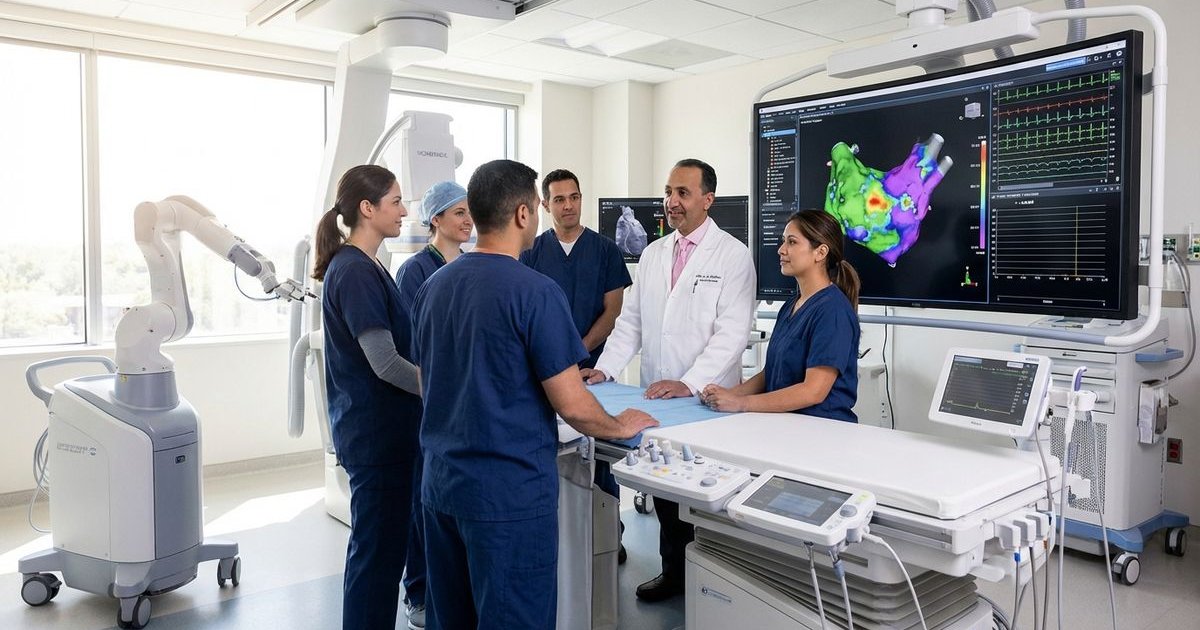
Our ablation procedures utilize advanced 3D mapping technology that creates detailed images of your heart’s electrical pathways, allowing for precise, effective treatment with minimal risk to healthy tissue.
Pacemaker Implantation
For patients with slow heart rhythms or heart block, pacemakers provide reliable, continuous support for the heart’s electrical system. These small devices are implanted under the skin and deliver electrical pulses that help maintain a normal heart rate.
We offer the latest pacemaker technology including:
- Traditional dual-chamber pacemakers
- Leadless pacemakers (tiny devices placed directly in the heart)
- Cardiac resynchronization therapy (CRT) devices for heart failure
Implantable Cardioverter-Defibrillators (ICDs)
For patients at risk of dangerous ventricular arrhythmias, ICDs provide life-saving protection. These devices continuously monitor heart rhythm and deliver therapy immediately if a life-threatening arrhythmia occurs.
Medication Management
Many arrhythmias can be effectively managed with medications that control heart rate, restore normal rhythm, or prevent blood clots. Our electrophysiologists carefully select and adjust medications to optimize effectiveness while minimizing side effects.
The LA Heart Specialists Approach
What sets our electrophysiology program apart:
Subspecialty Expertise: Our electrophysiologists have completed rigorous additional training focused specifically on heart rhythm disorders. This specialized expertise translates to better outcomes for our patients.
State-of-the-Art Technology: We invest in the latest mapping systems, ablation technologies, and cardiac devices to provide the most advanced care available.
Patient-Centered Care: We take time to explain your condition, discuss all treatment options, and involve you in decisions about your care. You’re never just a procedure; you’re a person we’re committed to helping.
Comprehensive Follow-Up: Our care doesn’t end when your procedure is complete. We provide thorough follow-up including device checks, medication management, and ongoing monitoring to ensure your long-term success.
Living with an Arrhythmia
If you’ve been diagnosed with a heart rhythm disorder, know that effective treatment is available. Many patients achieve excellent control of their arrhythmias and return to full, active lives. Our team is here to guide you through diagnosis, treatment, and beyond.
Schedule Your Consultation
If you’re experiencing palpitations, racing heart, dizziness, or have been told you have an arrhythmia, don’t wait to seek expert care. Contact Los Angeles Heart Specialists to schedule a consultation with our electrophysiology team. We’re here to help you find the right solution for your heart rhythm disorder.
Ready to Get Started?
Schedule your free consultation today and take the first step toward better heart health.
Schedule Consultation Call (213) 555-0199Quick Info
- Free initial consultation
- Same-day appointments
- Most insurance accepted
- Telehealth available
How It Works
Your journey to better heart health, step by step.
Comprehensive Rhythm Evaluation
We begin with thorough diagnostic testing including ECG, Holter monitoring, and electrophysiology studies to precisely identify your heart rhythm disorder.
Personalized Treatment Plan
Based on your diagnosis, we discuss all treatment options including medications, ablation procedures, and device therapy to develop the best approach for your specific condition.
Expert Procedure Performance
If a procedure is recommended, our experienced electrophysiologists perform it using the latest technology in our state-of-the-art electrophysiology laboratory.
Ongoing Care & Monitoring
After treatment, we provide comprehensive follow-up care including device checks, medication adjustments, and regular monitoring to ensure optimal outcomes.
Why Choose Us
What sets our ep services apart.
Subspecialty Expertise
Our electrophysiologists have completed additional years of specialized training focused exclusively on heart rhythm disorders and their treatment.
Advanced Technology
We utilize the latest mapping systems and ablation technologies to treat even the most complex arrhythmias with precision and safety.
High Success Rates
Our experience and expertise translate to excellent outcomes for our patients, with ablation success rates that meet or exceed national standards.
Comprehensive Care
From diagnosis through treatment and long-term follow-up, we provide complete care for all types of heart rhythm disorders.
Frequently Asked Questions
Common questions about our ep services.
What is electrophysiology?
What is cardiac ablation?
How long does an ablation procedure take?
What are the risks of ablation?
Related Services
Explore our other cardiology services.
Ready to Schedule Your Consultation?
Take the first step toward better heart health. Our team is here to help you every step of the way.