Minimally Invasive Heart Procedures
Minimally invasive procedures including angioplasty, stenting, and structural heart interventions.
What We Offer
Comprehensive interventional services tailored to your needs.
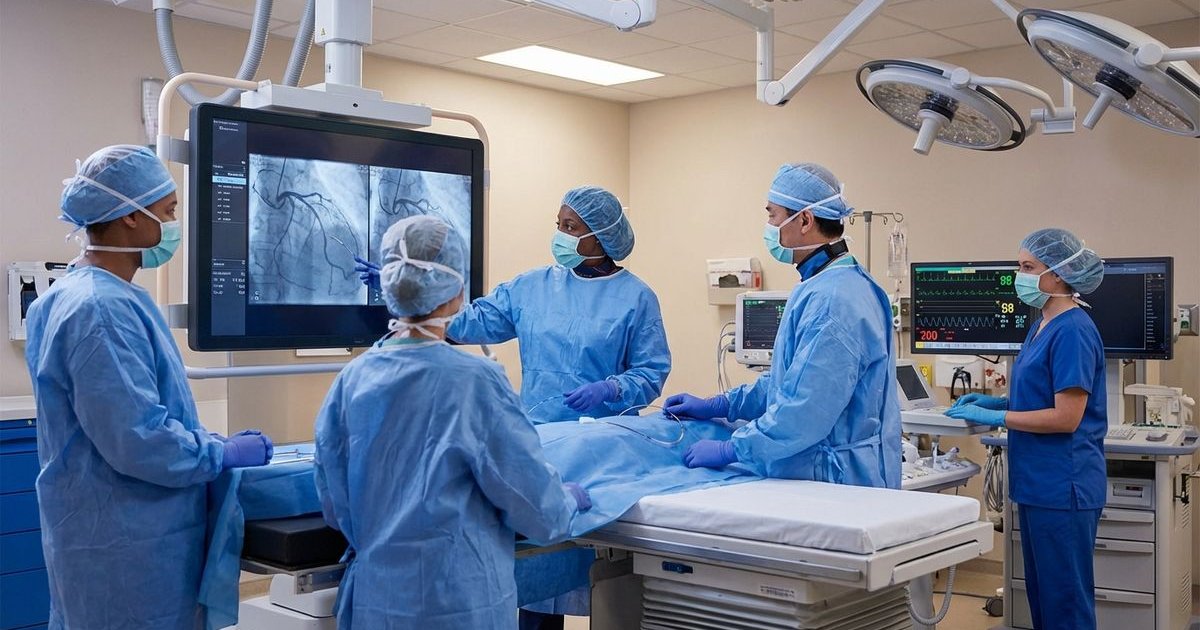
At Los Angeles Heart Specialists, our interventional cardiology team performs advanced catheter-based procedures to treat coronary artery disease and structural heart problems. Using minimally invasive techniques, we can open blocked arteries, place stents, and repair heart defects without the need for open-heart surgery in many cases.
What is Interventional Cardiology?
Interventional cardiology represents one of the most significant advances in heart care. Rather than requiring large incisions and open-chest surgery, interventional cardiologists use thin, flexible catheters inserted through small punctures in blood vessels to access and treat problems within the heart and arteries.
This approach offers significant advantages:
- Smaller incisions and less trauma to the body
- Faster recovery times
- Shorter hospital stays
- Less pain and discomfort
- Excellent outcomes for many conditions
Our Interventional Services
Diagnostic Cardiac Catheterization
Cardiac catheterization remains the gold standard for evaluating coronary artery disease. During this procedure, we inject contrast dye through a catheter and use X-ray imaging to visualize your coronary arteries in detail. This allows us to see exactly where blockages exist and how severe they are.
The procedure typically takes 30-60 minutes and is performed with local anesthesia and light sedation. Many patients are surprised at how comfortable the experience is.
Coronary Angioplasty and Stenting
When we identify significant blockages in your coronary arteries, angioplasty and stenting can often restore normal blood flow during the same procedure as your diagnostic catheterization.
How it works:
- A thin wire is guided past the blockage
- A balloon-tipped catheter is advanced over the wire
- The balloon is inflated, compressing the plaque against the artery wall
- A stent (metal mesh tube) is placed to keep the artery open
- The balloon and catheter are removed, leaving the stent in place
Modern drug-eluting stents release medication that prevents the artery from re-narrowing, providing excellent long-term results for most patients. Learn more about how heart stents work.
Rotational Atherectomy
For heavily calcified blockages that resist standard balloon angioplasty, rotational atherectomy uses a high-speed rotating burr to carefully grind away hard calcium deposits, allowing the artery to be fully opened and stented.
Intravascular Imaging
We use advanced imaging technologies including intravascular ultrasound (IVUS) and optical coherence tomography (OCT) to see inside your arteries in extraordinary detail. This helps us select the right treatment approach and ensure optimal stent placement.
Structural Heart Interventions
Beyond coronary artery disease, our interventional team treats structural heart problems including:
Transcatheter Aortic Valve Replacement (TAVR) For patients with severe aortic stenosis who are high risk for traditional surgery, TAVR allows replacement of the damaged valve through a catheter without open-heart surgery.
Patent Foramen Ovale (PFO) Closure We can close this common heart defect through a catheter, eliminating the need for surgical repair.
Left Atrial Appendage Closure For atrial fibrillation patients who cannot take blood thinners, we can close the left atrial appendage to reduce stroke risk.
The Patient Experience
Before Your Procedure
We provide detailed pre-procedure instructions including medication adjustments, fasting requirements, and what to bring. Our team answers all your questions and ensures you feel prepared and comfortable.
During Your Procedure
You’ll receive local anesthesia at the catheter insertion site and light sedation to keep you comfortable. Most patients remain awake but relaxed throughout. Our team communicates with you during the procedure and monitors you continuously.
After Your Procedure
Recovery depends on the specific procedure performed:
- Diagnostic catheterization: Most patients go home the same day after a few hours of observation
- Angioplasty/stenting: Many patients go home the same day or the next morning
- Complex procedures: May require one or more nights in the hospital
You’ll receive detailed discharge instructions including medication changes, activity restrictions, and follow-up appointments.
When is Intervention Needed?
Interventional procedures are typically recommended when:
- Coronary artery blockages cause symptoms like chest pain (angina)
- Blockages are severe enough to threaten the heart muscle
- Medical therapy alone is not adequately controlling symptoms
- A heart attack is occurring or has recently occurred
- Structural heart problems require repair
Not everyone with coronary artery disease needs intervention. Our team carefully evaluates each patient to determine whether medical management, intervention, or surgery provides the best outcome.
Why Choose LA Heart Specialists?
Experience: Our interventional cardiologists have performed thousands of procedures and maintain excellent outcomes.
Technology: We utilize the latest catheterization lab equipment, imaging modalities, and stent technologies.
Efficiency: We focus on same-day discharge when safe and appropriate, minimizing your time away from home.
Coordination: We work closely with our cardiac surgeons, ensuring you receive the optimal treatment whether that’s intervention, surgery, or a hybrid approach.
Schedule Your Consultation
If you’ve been told you have coronary artery disease or a structural heart problem, let our interventional team evaluate your options. Contact Los Angeles Heart Specialists to schedule a consultation and learn whether minimally invasive treatment could be right for you.
Ready to Get Started?
Schedule your free consultation today and take the first step toward better heart health.
Schedule Consultation Call (213) 555-0199Quick Info
- Free initial consultation
- Same-day appointments
- Most insurance accepted
- Telehealth available
How It Works
Your journey to better heart health, step by step.
Diagnostic Evaluation
We review your symptoms, test results, and imaging studies to determine if an interventional procedure is the best treatment approach for your condition.
Pre-Procedure Preparation
You receive detailed instructions about preparation, including medication adjustments, fasting requirements, and what to expect on procedure day.
Minimally Invasive Procedure
Using advanced catheter techniques, we access your heart through a small puncture in your wrist or groin, avoiding the need for open surgery in many cases.
Rapid Recovery
Most patients recover quickly from catheter procedures. Many go home the same day or the next morning and can resume normal activities within a few days.
Why Choose Us
What sets our interventional services apart.
Expert Operators
Our interventional cardiologists have performed thousands of procedures and stay current with the latest techniques and technologies.
Advanced Technology
We utilize state-of-the-art imaging and catheter systems for precise, effective procedures with optimal outcomes.
Minimally Invasive Focus
Whenever possible, we use catheter-based approaches that avoid open surgery, resulting in faster recovery and fewer complications.
Comprehensive Care
From initial evaluation through procedure and recovery, we provide coordinated care every step of the way.
Frequently Asked Questions
Common questions about our interventional services.
What is interventional cardiology?
What is angioplasty and stenting?
How long does recovery take after stenting?
Are interventional procedures safe?
Related Services
Explore our other cardiology services.
Ready to Schedule Your Consultation?
Take the first step toward better heart health. Our team is here to help you every step of the way.